
AI Readiness Assessment: Is Your Company Actually Ready for AI Adoption?
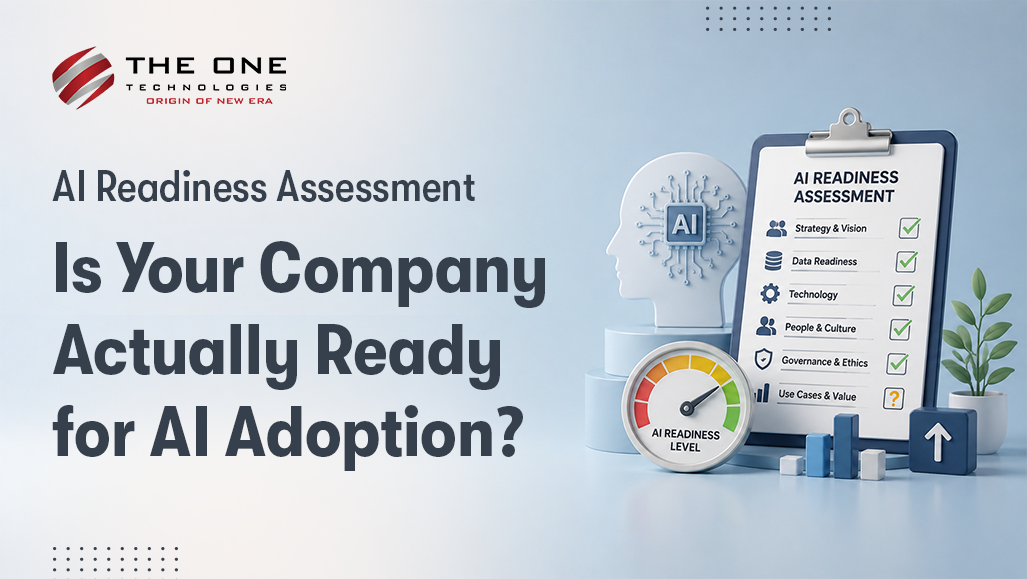
MIT's 2025 State of AI in Business report found that 95 percent of generative AI pilots delivered no measurable financial return. The models weren't the problem. Most of those companies never checked whether they were actually set up to use one. A proper AI readiness assessment catches that gap before it eats a budget cycle.
What 'AI ready' actually means
Five things, really. Your data. Your process. Your people. Your systems. And your patience for a second attempt if the first one flops.
None of that shows up when a leadership team gets excited in a strategy meeting. We have sat in plenty of those meetings. Excitement fills the room fast, and it tells you nothing about whether the export button on your CRM even works.
The five things worth checking before you spend a dollar
- Data quality. Feed an AI system messy, scattered data and you get a messy, scattered result, just faster.
- Process clarity. Can you walk someone through the exact steps you want automated, in order, without two people in the room disagreeing on step 3?
- Team buy-in. Will people actually use this daily, or will it end up next to the CRM field nobody bothers filling in?
- System integration. Does this plug into what you already run, or does it demand you rebuild half your stack first?
- Budget for iteration. Round two and three cost money too. Is that money set aside, or did it all go to round one?
The excitement trap
A team can be genuinely excited about AI and still be nowhere close to ready for it. That excitement is a sales signal, not proof of readiness.
Here's the real tell. Ask what decision, specifically, you want the system to make. "We want to use AI for customer service" is still an idea, not a plan. "We want it to triage support tickets by urgency before a human sees them" is a plan. One of those you can scope this week.

A 10-minute self-check
Say these out loud with your team. No slides, no deck, just answers.
- Name the one process you'd automate first, in a single sentence.
- Where does the data for that process actually live, and can you export it today?
- Has anyone on the team touched a similar tool before, even informally?
- If the first attempt flops, is that a minor setback or does it end the budget for next year?
Fewer than three solid answers means the readiness work comes first. Three or four, and you're already ahead of most companies that jump straight to a vendor demo.
Readiness varies by department
Companies keep asking "are we ready for AI" as if one answer covers the whole building. Finance might have five years of clean, structured records. Support might have ticket notes scattered across three tools with zero consistent tagging.
Run the check department by department. You can be ready to automate invoice matching in finance while being nowhere near ready for an AI agent handling customer refunds, in the same company, in the same quarter. Pick the readiest process first instead of the flashiest one. That choice alone decides whether a pilot sticks around past month three.
What skipping this step actually costs
Failed AI pilots rarely die loudly. They just stop getting opened a few months in, once the demo excitement wears off. By then the budget's gone, the person who championed it has moved to a different project, and the next AI proposal gets a much harder no in that building.
A readiness check runs a few weeks. Compare that to a quarter of engineering time spent building around gaps nobody bothered to flag first.
What a real assessment looks like
It walks through your existing systems, maps where your data actually lives, and flags the process steps nobody's ever written down. Then it gives you a straight answer: ready now, ready after three specific fixes, or not the right fit yet.
That third answer is worth more than it sounds. A good consulting partner will tell you when you're not ready, because a rushed build that fails costs more, in cash and in internal trust, than eight weeks spent fixing a data pipeline first. Want that honest answer for your own operation? Hire AI developers who assess the fit before they touch a single line of code.