Why Enterprises Are Investing in SQL ETL Automation for Scalable Growth
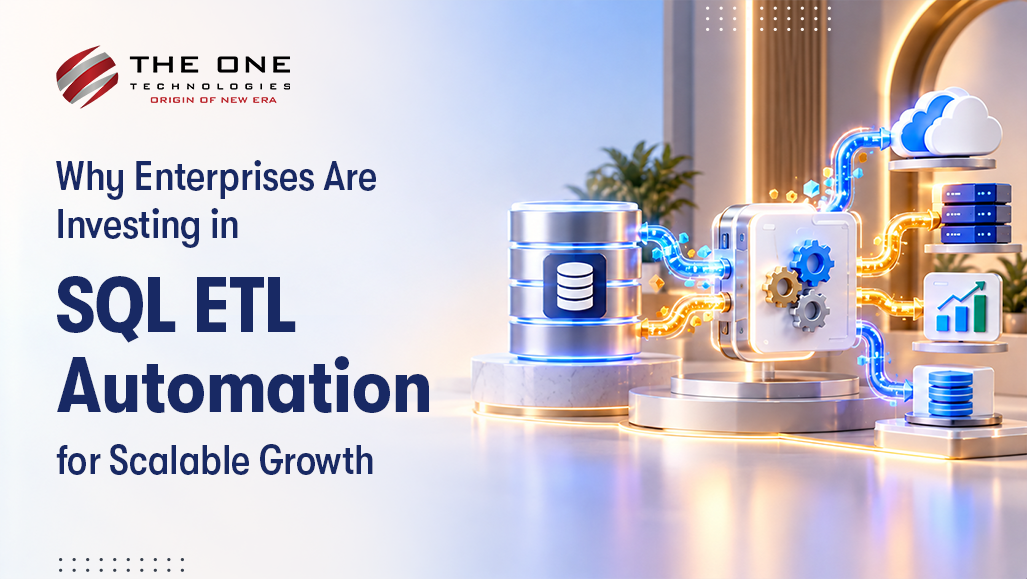
Enterprise data is seldom static. Customer data can be in CRM platforms, financial records in databases, operational data in business applications, and reporting data in a cloud warehouse. As companies grow, it becomes harder to move and prepare this information manually.
Here, leveraging modern SQL ETL services and automation is becoming an important part of modern data architecture. The combination of ETL processing with SQL-based data transformation enables enterprises to automate data movement, reduce repetitive work, improve data quality, and build pipelines that can handle growing workloads. With modern ELT, the raw data can be loaded into cloud warehouses, and then SQL transformations are done inside the warehouse.
What Is SQL ETL Automation?
ETL means extract, transform, and load. The process consists of taking data from source systems, transforming it for use, and loading it into a target system such as a data warehouse or database. SQL is often used in this workflow to query, clean, join, filter, aggregate, and transform relational data.
SQL ETL automation takes it a step further and reduces the reliance on manual execution. Automated pipelines can be scheduled on defined schedules or business events instead of teams running queries or moving files over and over again. They may also include monitoring, error handling, retries, and validation.
For enterprises dealing with large data volumes, this approach creates a more consistent way to manage data across systems.

Growing Data Volumes Are Driving Automation
Usually, the data infrastructure becomes more complex as an organization grows. New applications are added, customer records grow, transactions become more frequent, and reporting requirements increase.
In this environment, manual data preparation does not scale well. Employees could spend hours exporting files, cleaning up records, running SQL queries, and checking whether information has reached the right place.
Implementing SQL ETL services for automation reduces this manual workload. Once you set up a pipeline, data operations can run automatically on a recurring basis. Then teams can spend more time working with the data instead of preparing it over and over again.
This is especially useful for enterprises that need regular reporting, operational dashboards, financial analysis, or customer data integration.
Better Data Quality and Consistency
Data from different systems often follow different formats and rules. Customer names may be stored differently across applications. Dates may use different formats. Duplicate records can also appear when information is collected from multiple sources.
SQL has the tools to make this information standard. Queries can eliminate duplicates, convert data types, apply business rules, join tables, and compute useful metrics. The ETL automation can then apply these transformations in a consistent manner every time there is new data coming into the pipeline.
Automated validation can also detect missing records, unexpected values, or changes in the source structure. This gives data teams a better way to maintain the reliability of their datasets as the organization grows.
SQL and Modern Cloud Data Warehouses
Cloud data warehouses have transformed how companies deal with ETL. Traditional ETL transforms data before loading it into the target system. The first step in ELT is to load raw data into the warehouse and then transform the data in the warehouse using SQL.
This model takes SQL to modern data engineering. Platforms like Snowflake, BigQuery, and Redshift can provide you the compute power for large-scale transformations.
This may facilitate enterprises to adapt data pipelines as reporting requirements evolve. “New transformation logic can be added without re-designing the whole process.”
Reduced Operational Effort
One of the main reasons enterprises invest in SQL ETL automation is the reduction in repetitive operational work.
A production data pipeline needs more than just SQL queries. It may include scheduling, dependency management, failure handling, monitoring, and alerts. These functions are not available with SQL alone, which is why enterprises generally combine SQL transformations with ETL platforms or workflow orchestration tools to achieve end-to-end SQL ETL automation.
Automation allows these processes to be performed with less human intervention. If a scheduled pipeline fails, monitoring systems can then alert the appropriate team. Some platforms can even automatically rerun the failed jobs.
This gives data teams more control over production workloads while reducing the chances of simple human errors.
Supporting Enterprise Growth
Scalability is a key component of any enterprise data strategy. If your organization processes millions of records every day, a pipeline that can process a few thousand records may not be the best pick.
SQL ETL automation allows organizations to create scalable, repeatable data workflows that can scale with the needs of their data. Another choice is incremental processing where only new or changed records are loaded, and the whole data set is not processed each time. It can make the pipeline perform better and reduce unnecessary processing.
The outcome is a data environment that can deal with higher workloads, without needing more manual work.
Building a Stronger Data Foundation
Reliable information is the engine of business growth. Data stored in separate system “silos” makes reporting slow and inconsistent because it requires manual preparation.
SQL ETL automation provides a systematic way to collect and prepare data for analytics, reporting, and business applications. With the right testing, monitoring, governance, and documentation, organizations can build pipelines that are easier to maintain as their technology environment changes.
For companies looking to scale their data infrastructure, automated SQL ETL workflows can be a practical way to build a more scalable data environment.
The Conclusion
SQL ETL process automation helps enterprises cope with growing data volumes, reduce repetitive data tasks, and improve consistency. With SQL and automated data pipelines, organizations can transform data to build a stronger foundation for analytics and long-term success.
If your enterprise needs a reliable way to integrate data and automate SQL ETL, The One Technologies can help you design and implement solutions that work with your existing systems. Contact our team to discuss your data needs and formulate an automation plan to help fuel your next phase of growth.